
On this page
- Why keyword research matters for affiliate SEO
- Step 1: Choose a niche, an audience and a problem to solve
- Step 2: Generate and expand your keyword list
- Step 3: Check search intent and pick the content format
- Step 4: Judge ranking opportunity and profit
- Step 5: Validate each keyword before you commit
- Step 6: Group keywords and build a content marketing plan
- Step 7: SEO tips to optimize, publish, promote and track rankings
- Common affiliate marketing keyword research mistakes
- Final thoughts
- Frequently asked questions (FAQs)
Affiliate marketing keyword research is how you find searches that a niche site can rank for and turn into commissions. It's the first step of affiliate SEO and the one most marketers rush, and it decides what content you create for months. The goal isn't the biggest monthly searches; it's keywords with buying intent, low competition and a product you can honestly recommend. This step-by-step guide covers how to research keywords for a niche, which free keyword research tools to use, how to read search volume, how to judge profit and difficulty, and how to turn a keyword list into an affiliate SEO plan that builds topical authority.
Key takeaways
- Start with an audience and a problem, not a commission rate. Affiliate marketing content only earns when it helps someone decide.
- Commercial keywords ("best", "vs", "review") pay; informational keywords build the authority that lets you rank for them.
- Low competition keywords with clear intent beat high-volume terms for a new affiliate site.
- Check the SERP for every keyword: page types, domains, missing angles. Difficulty scores are a hint, not a verdict, and SEO tools disagree with each other.
- One keyword group per page, supporting blog posts around each money page, honest disclosure on all of them.
Why keyword research matters for affiliate SEO
Affiliate marketing lives or dies on organic traffic from search engines, from readers who are close to a decision, and search engines reward sites that cover a topic in depth. Unlike paid campaigns, organic SEO visibility compounds: every ranking page keeps sending potential customers for months. A keyword can have modest monthly searches and still be worth a page if it attracts potential customers, matches products in your affiliate program and gives you a realistic chance to rank. Keyword research is what connects a reader's need to the right page, and the right page to the right product.
It also protects you from the classic mistake: twenty thin web pages chasing high-volume terms that established sites with thousands of backlinks already own. A keyword strategy built on search volume alone is how most affiliate marketing sites fail; SEO rewards depth over breadth.
Step 1: Choose a niche, an audience and a problem to solve
Pick a topic area you can cover with useful knowledge, not just a category with high commissions. "Home coffee" becomes workable when you target beginners choosing a grinder for a small kitchen. "Keto" becomes workable when you focus on meal-prep gear for people who cook once a week. The narrower the audience, the easier it is to write high-quality content that beats what ranks.
List the product categories, common problems and decisions your audience faces. A fitness site might include resistance bands, workout plans and questions about training in a small space. Those needs become your seed keywords and give every piece of content a reason to exist beyond the link. Visitors can tell when a page exists only to carry affiliate links.
Find seed keywords with free sources
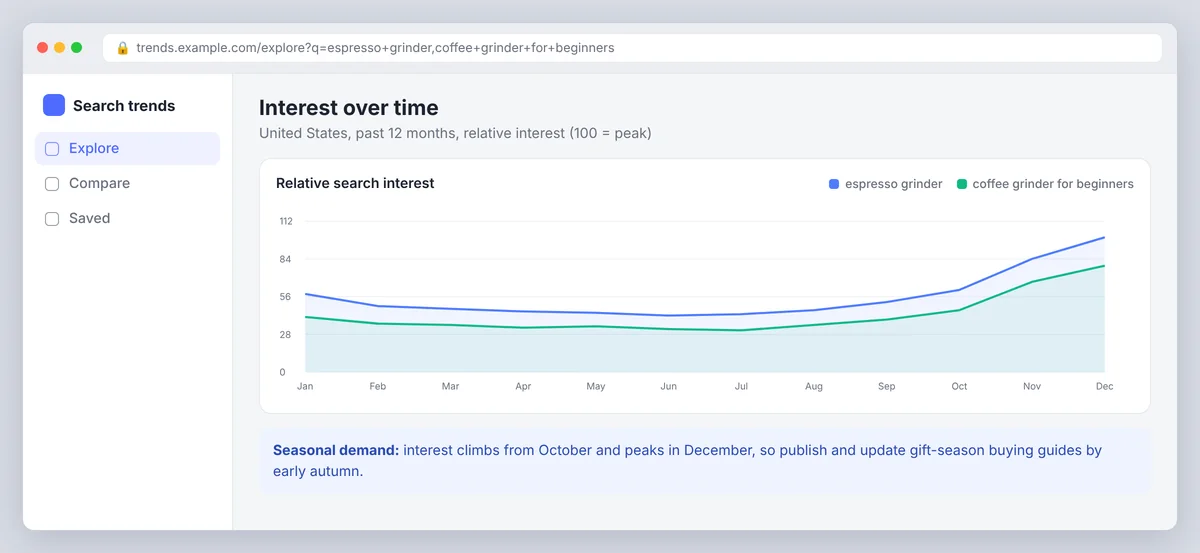
Type a broad phrase into Google and note autocomplete, related searches and People Also Ask. Browse Reddit and niche forums for the words people use when describing a problem. Use Google Trends to spot seasonal demand. Google Keyword Planner gives rough search volume and competition for Google Ads campaigns, which doubles as a commercial-intent signal. AI chatbots can brainstorm keyword ideas, but treat the output as a list to check, not proof anyone searches for it.
Step 2: Generate and expand your keyword list
Build the list around the seed topics, then collect modifiers that reveal different intents: "how to", "best", "vs", "review", "for beginners", "under $100". Include product names and constraints such as budget, size, skill level or compatibility. Keep the list in a spreadsheet with search intent, estimated search volume, keyword difficulty, product fit and notes from the results page, and organize it by topic; our keyword research template has the layout.
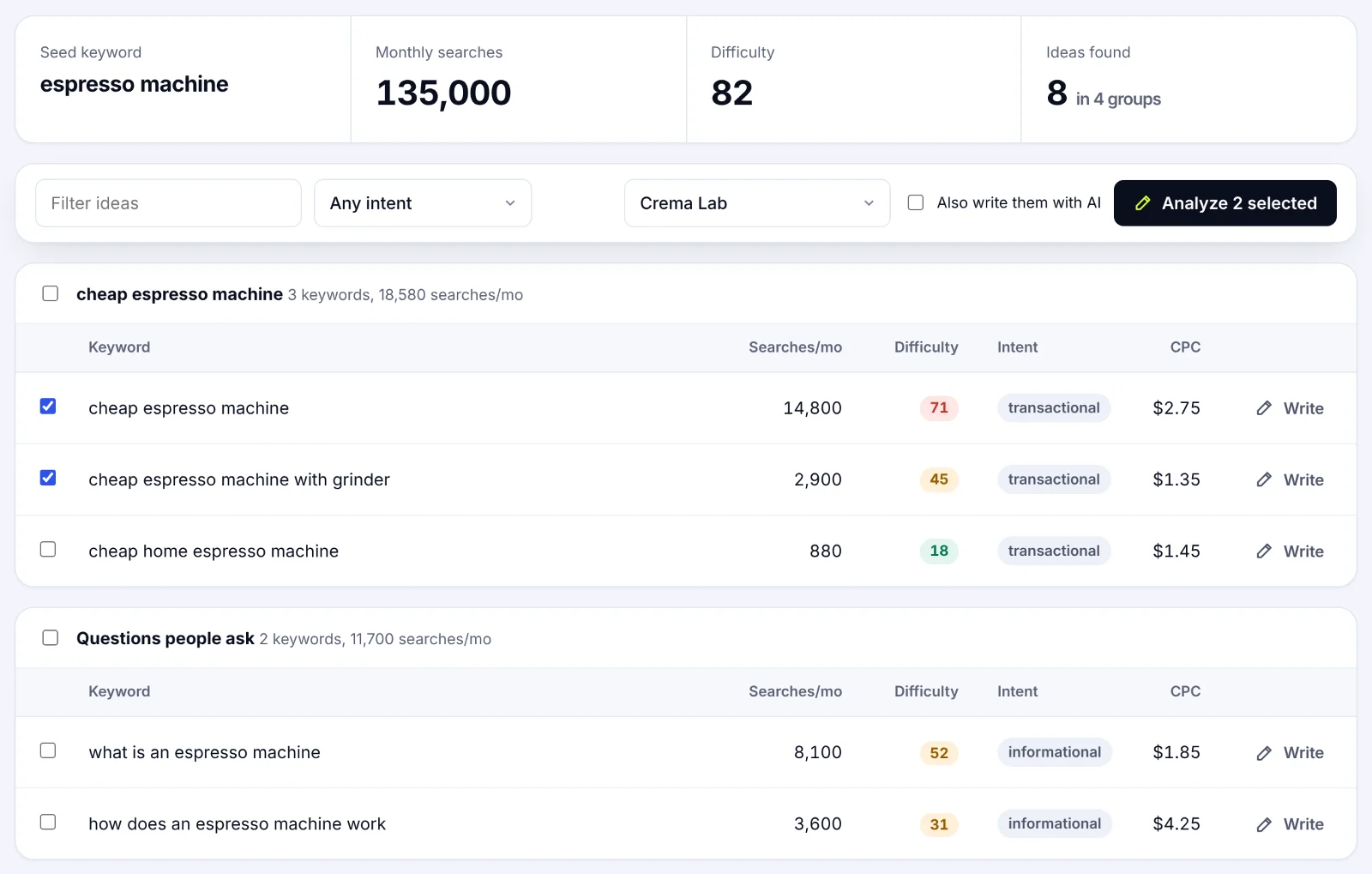
A keyword research tool that groups keyword ideas does most of the sorting. SerpPal's Content Planner takes a seed topic and returns related keywords with monthly searches, difficulty, intent and CPC, grouped by topic, so a money page and its supporting blog posts come out together. Google Search Console then shows which queries your site already earns organic impressions for, which is the best keyword search data you'll ever get for free.
Step 3: Check search intent and pick the content format
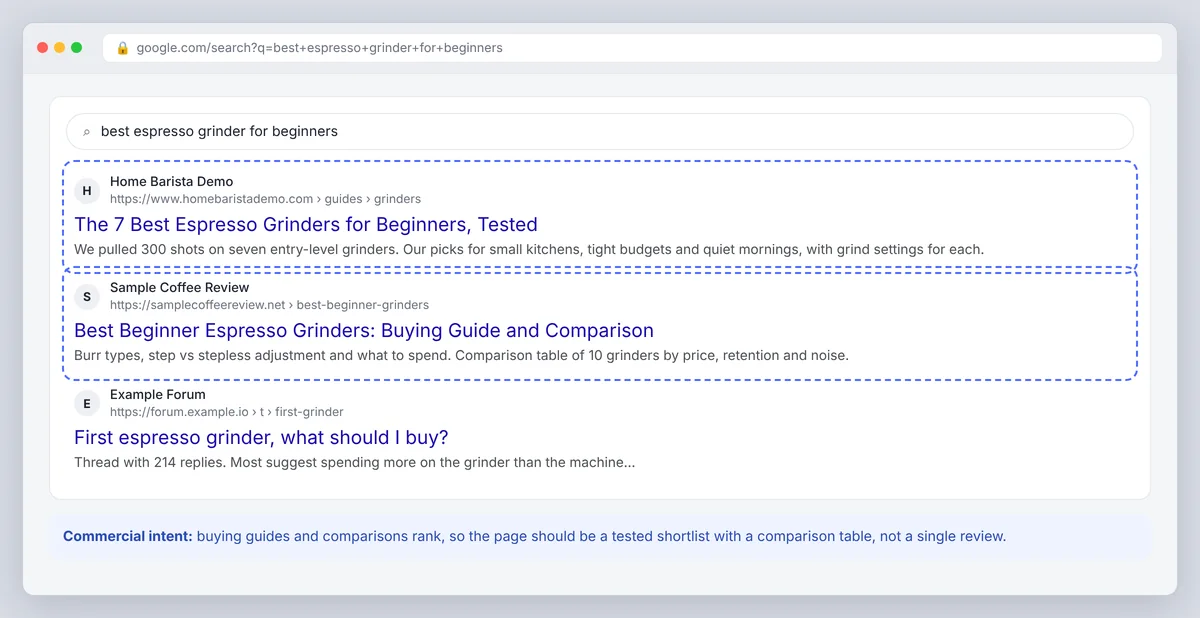
Search intent tells you what readers expect, and the SERP tells you what Google thinks they expect. Look at the results ranking for a query and match their format if it serves readers. A mismatch makes even optimized content hard to rank.
| Intent | Example keyword | Format | Role in the funnel |
|---|---|---|---|
| Informational | how to dial in espresso | Tutorial, explainer, long-tail keywords | Builds trust and authority; links to money pages |
| Commercial | best espresso grinder for beginners | Buying guide, shortlist, comparison | Main affiliate earner |
| Transactional | [model] grinder review | Single product review | Highest purchase intent, lower volume |
| Navigational | [brand] coupon | Deals page | Occasional; brand-dependent |
Focus on purchase intent keywords (transactional and commercial) for your money pages, and plan informational keywords around them. Affiliate marketing works best when recommendations fit the page's purpose rather than interrupting it, and readers can tell the difference. Voice search queries ("what's the quietest grinder for an apartment") tend to be long questions, so an FAQ section on each guide picks up voice search traffic without extra pages; as voice search grows, those answers matter more.
Step 4: Judge ranking opportunity and profit
Balance search volume against competition and commercial fit. A broad main keyword promises traffic but attracts sites with far more authority and backlinks. A specific query is a better target for a newer site if you can give a more useful answer.
Check the competition (but don't be scared of it)
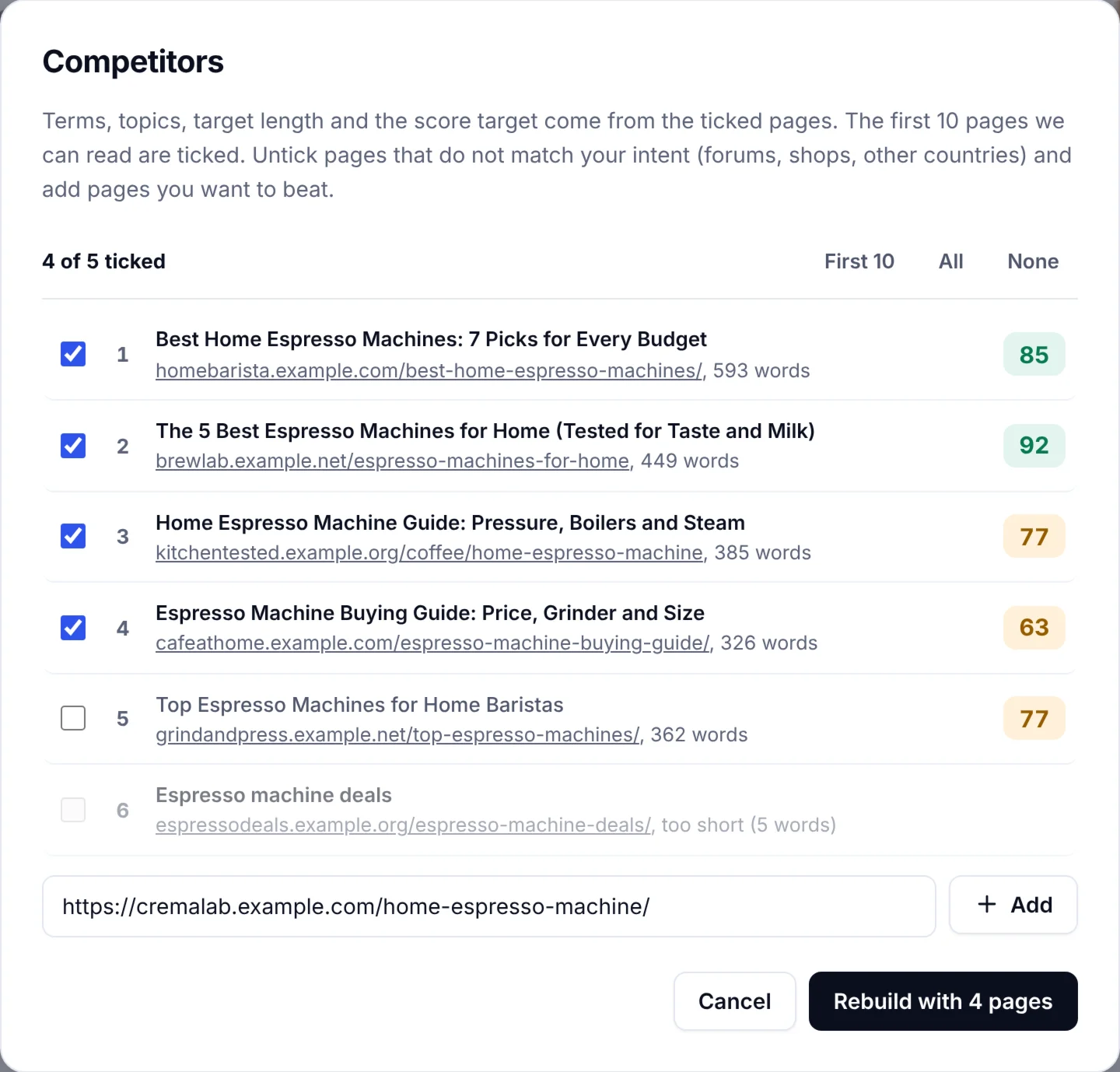
Review the SERP. Note the ranking domains, page formats, freshness and the questions they leave unanswered. Big sites rank with outdated reviews and generic lists all the time; a page with real testing, clear pros and cons and honest limitations can beat them on the long tail. SerpPal's competitor analysis shows each ranking page's structure, length and content score, so you can see exactly what you'd have to beat.
Estimate the money
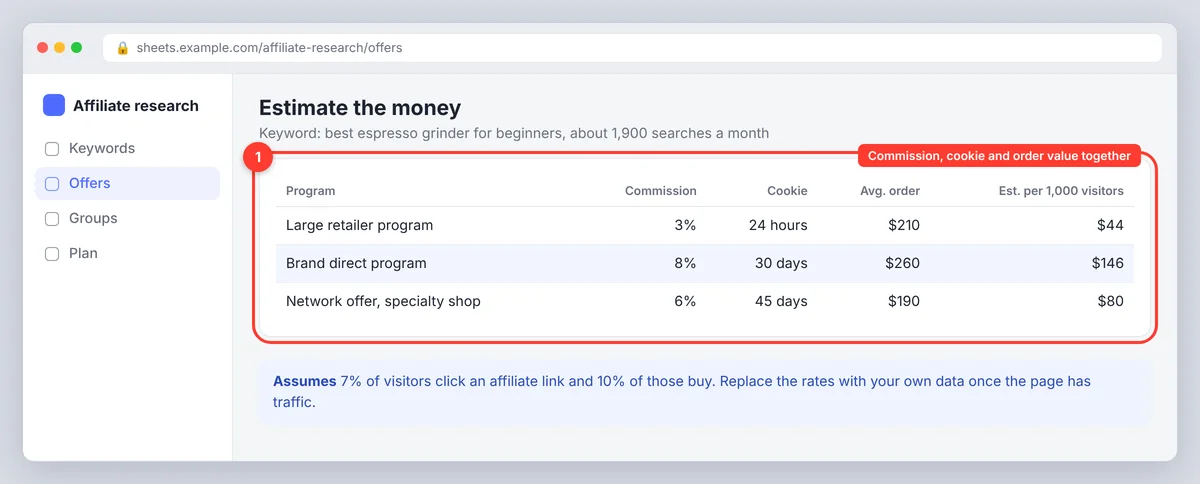
Will the reader consider a product? Does a relevant product exist with an affiliate program, either direct or through an affiliate network? Could a sale or a CPA offer make the page worthwhile? Check commission terms, cookie length and average order value, but don't assume a high rate makes a weak topic profitable. Conversion potential and product relevance matter more. A rough ROI check: search volume multiplied by a realistic click share, by conversion rate, by commission. If the number embarrasses you, pick another keyword.
Look for long-tail keywords and ranking gaps
Long-tail search terms such as "quiet coffee grinder for an apartment" have lower volume but reveal a defined need and are easier to answer well. Look for opportunities rather than weak competitors: outdated reviews, missing use cases, comparisons that ignore budget. A page wins when it fills a real need with evidence and clear descriptions. These opportunities are where a new site gets its first rankings.
Step 5: Validate each keyword before you commit
Before assigning a keyword, answer five questions:
- Is the topic relevant to my website?
- Is someone actively searching for it?
- Can I create something better than what's already ranking?
- Can I support it with related articles?
- Does it help my audience solve a real problem?
Then analyze the keyword properly. SerpPal's analysis reads the ranking pages and gives you the terms they share, their headings, the questions searchers ask and a target length, which is both the validation and the brief for the page. If a phrase has no visible demand, unclear product fit or results that don't match your planned format, set it aside.
Step 6: Group keywords and build a content marketing plan
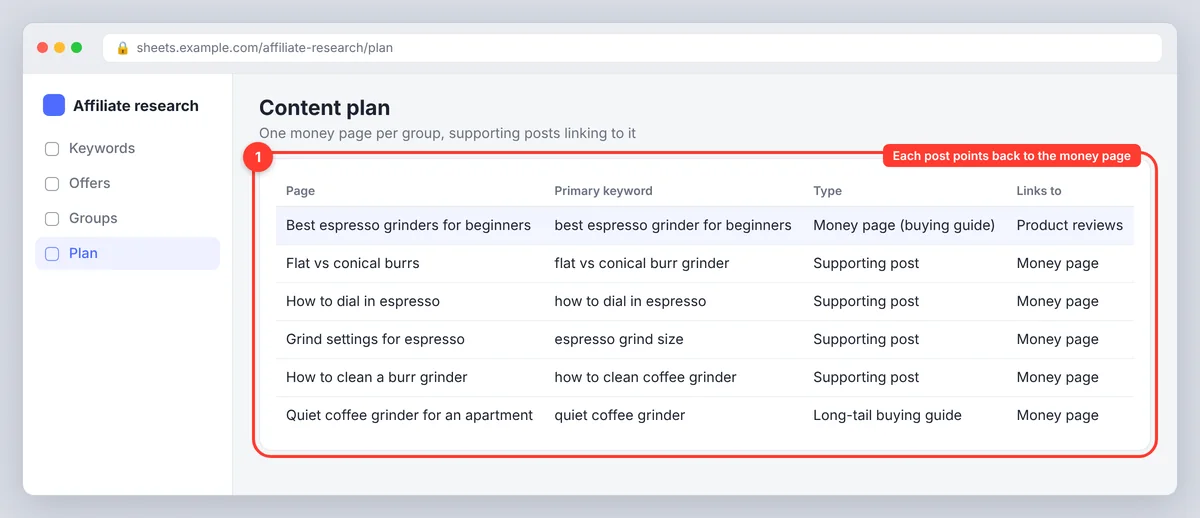
Group keywords by shared intent, not similar wording. "Best budget rowing machine" and "affordable rowing machines" belong on one buying guide; "how to use a rowing machine" needs its own page. Assign one primary keyword to each URL so your articles don't compete with each other.
Then plan supporting content around each money page. A guide to espresso grinders links to posts on burr types, grind settings and cleaning. That group helps people decide, gives search engines a connected set of pages, and builds the topical authority that lets a small site rank for commercial keywords at all. It's content marketing with a purpose, and the content calendar writes itself: every post has a job in the funnel. Our guide on what to do after keyword research covers mapping and prioritizing in detail.
Create content that converts, then nurture with email
Answer the main question early, explain how you assess products, show pros and cons, highlighting the trade-offs, and disclose affiliate relationships clearly. The FTC's endorsement guides set out what disclosure means in practice. Then capture the people who aren't ready to buy: email marketing lets you nurture leads with comparisons and deals, which turns one-visit traffic into repeat commissions and reduces your dependence on rankings. Promoting affiliate products to a list you own is the most durable part of the strategy.
Step 7: SEO tips to optimize, publish, promote and track rankings
On-page optimization that actually works
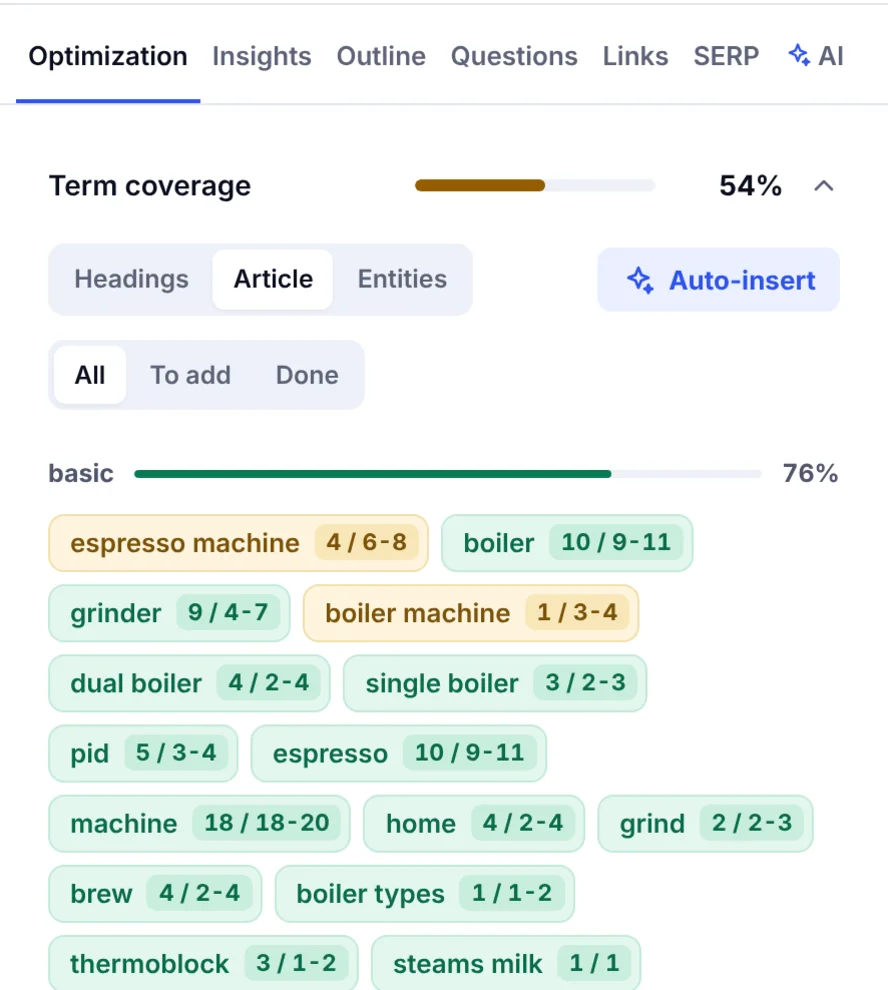
Use the keyword naturally in the title, H1, first paragraph and a couple of headings. Cover the terms and questions the ranking articles cover, add a comparison table, keep paragraphs short and put the verdict near the top. Write descriptive meta descriptions that promise the answer. SerpPal's editor scores the draft against the ranking pages as you write and flags missing terms and headings, which is the fastest way to make sure a guide is complete before it goes live.
Off-page SEO and promotion
Backlinks still decide who wins competitive keywords, and they boost every page on the domain, not just the one linked. Earn them with original data, tests and tools, guest posts on popular niche sites, and outreach to the sites you cite. PPC can fill the gap while organic rankings build, if the commission supports the click cost. Promote each guide on social media, LinkedIn for B2B and SaaS niches, and in communities where the question comes up, and link to it from your newsletter. Promoting consistently is what gives new articles visibility before the links arrive. Off-page work is slow; start it the week the page goes live.
Measure and refresh
Monitor impressions, clicks, rankings and conversions. Google Search Console shows which queries bring impressions and where a page needs a clearer answer or a better title; Google Analytics shows what searchers do next; your affiliate dashboard shows clicks and sales. Steady impressions but few clicks means fix the title; a better title can boost click-through overnight. Clicks without conversions means fix product fit or page clarity. Refresh pages when products change, seasonal demand shifts or the results start favoring a different format.
Common affiliate marketing keyword research mistakes
- Choosing keywords by volume alone when the topic doesn't fit your audience or products.
- Targeting competitive keywords before the site has supporting blog posts and authority.
- Publishing several articles for nearly identical queries instead of grouping them.
- Trusting AI suggestions or difficulty scores without checking the search results.
- Adding affiliate links where they don't help the reader decide.
- Skipping disclosure, which costs credibility with your audience and can breach FTC rules.
Final thoughts
Affiliate marketing SEO is a patience game, and keyword research is where the patience pays off. Google's quality guidelines (E-E-A-T) reward experience, so the insights from actually using the products are your edge over bigger sites. Pick keywords you can win, write articles that genuinely help, cluster them so the site earns authority, and let the commercial keywords come to you as the informational ones rank.
Frequently asked questions (FAQs)
How can I do keyword research for affiliate marketing?
Define the audience and its problems, collect seed ideas, expand them with a keyword research tool, check intent and competition, assess product fit, validate the SERP, group related keywords and assign each group to a page. Then measure and refresh.
What are the best keyword research tools for affiliate marketers?
Google Keyword Planner, Google Trends, Autocomplete and Search Console cover the free basics. Paid keyword tools such as Semrush, Ahrefs Keywords Explorer and Ubersuggest add difficulty metrics, competitor keywords and bigger lists; check their sites for current plans. A planner that groups keywords by intent and an analysis tool that shows what the ranking pages contain save the most time once you're producing articles every week.
How do I know if a keyword will make money?
Look for commercial intent, a relevant product with an affiliate program, and a SERP you can realistically compete in. Then estimate search volume, click share, conversion rate and commission. No keyword guarantees earnings, but that calculation separates hobby topics from money pages.
Can I use AI tools to generate keywords?
Yes, for brainstorming questions and phrasing. Verify every idea with search data and a SERP review, because AI suggests phrases with no demand and mislabels intent.
How often should I do keyword research?
Review Search Console monthly for queries you're already appearing for, refresh priorities each quarter, and run a full pass when you enter a new sub-niche or a competitor takes a keyword you rely on.