On this page
A blog post is a single article published on a blog, written in a conversational voice, organized with headings, and focused on one topic or question. The best blog post examples all do the same thing: they pick one reader, promise one outcome in the title, and deliver it in a format that fits the topic, whether that's a how-to, a list, a story or a case study.
Below you'll find the main types of blog content with a short sample of each, blog examples by type of site for inspiration, first article ideas, ideas for students, and a template you can copy.
Key takeaways
- Most successful blog content fits one of about ten formats: how-to, listicle, ultimate guide, personal essay, case study, review, comparison, opinion, interview and roundup.
- Choose the format from the reader's question. "How do I..." wants a how-to; "best X" wants a list or comparison; "what happened when..." wants a story.
- Every good piece has the same bones: a clear title, an intro that answers fast, scannable sections, images, and a next step.
- Your first blog post doesn't need to be perfect. A short introduction or a simple how-to on something you know well is enough to start.
- Study blogs in your niche for structure, tone and design, not for words to copy.
What is a blog post?
A blog post is one entry on a blog: an article with a title, a date, an author and a body of text, often with images, tags and comments. Entries appear in reverse order on the homepage or category pages, so recent posts show first and returning visitors see what's new.
Blog posts differ from other web pages in two ways. They're written for readers who want to learn something or be entertained, not for a sale on the spot, and they usually answer a question or cover a moment rather than describe a product. A business blog might publish tutorials, updates and industry trends; a personal blog might publish travel notes, recipes and reflections.
Most bloggers use a platform like WordPress (the most popular blogging platform), which handles hosting options, layout, categories and publishing functionality, so you can focus on the words. Whatever the platform, the writing approach is the same.
Types of blog posts with sample headlines
Here's a quick overview of the formats you'll see most, what each one is for and a sample title.
| Type | Best for | Sample title |
|---|---|---|
| How-to guide | Teaching a task in order | How to Repot a Houseplant Without Killing It |
| Listicle | Tips, ideas and resources readers can scan | 15 Cheap Weeknight Dinners for Two |
| Ultimate guide | Covering a topic in depth | The Beginner's Guide to Personal Finance |
| Personal essay | Building connection and trust | What I Learned From a Year of Freelancing |
| Case study | Showing results with real numbers | How a Small Bakery Doubled Online Orders |
| Review | Helping readers decide on one product | A Six-Month Review of a Budget Standing Desk |
| Comparison | Choosing between two or three options | Notion vs Google Docs for Writing a Novel |
| Opinion | Taking a clear position | Why Most New Year's Resolutions Fail |
| Interview | Sharing an expert's knowledge | Five Questions for a Wildlife Photographer |
| Roundup | Collecting the best resources in one place | The Best Free Design Resources This Month |
1. How-to guide
A how-to walks readers through a task from start to finish. It's the most useful format for Google, because people type "how to" when they need help, and it's the most actionable.
Sample opening: "Repotting a plant takes about ten minutes. You need a pot one size larger, fresh potting mix and a spoon. Here's how to do it without damaging the roots." Then numbered steps, one action each, with images of the tricky parts.
2. Listicle
A listicle is a numbered list of tips, ideas, tools or resources. Readers like it because they can scroll and stop at whatever interests them.
Sample: "15 Cheap Weeknight Dinners for Two," where each item has a short description, a photo and a link to the full recipe. Make every item useful; a list padded to hit a round number shows.
3. Ultimate guide
An ultimate guide covers a topic in depth: definitions, steps, mistakes and FAQs. It often becomes a blog's most-linked page and a resource the rest of the blog points to.
Sample: "The Beginner's Guide to Personal Finance" with sections on budgeting, saving, debt and investing, each pointing to a deep dive on that subject. Keep it structured with a table of contents so readers can navigate.
4. Personal story
Storytelling is the heart of lifestyle, travel and parenting blogs. It builds credibility because readers get to know the writer, and it encourages comments and engagement.
Sample opening: "A year ago I quit my office job with three months of savings and one client. Here's what went right, what went badly and what I'd do differently." The piece needs a point: end with the lesson the reader can use.
5. Case study
A case study shows how a person or business solved a problem: the challenges, the process and the results. It's common in marketing blogs because real numbers are more convincing than claims.
Sample: "How a small bakery doubled online orders in six months," covering the starting point, the three changes they made and the measured results.
6. Review and comparison
A review covers one product in depth after real use. A comparison puts two or three options side by side, often in a table, and ends with a clear recommendation for each type of reader. Both work well for affiliate marketing, as long as you disclose them and stay honest about the flaws.
7. Opinion, interview and roundup
An opinion piece takes a position and defends it with evidence. An interview shares an expert's answers in their words, which adds authority without you being the expert. A roundup (often called editor's picks) showcases curated reading, tools or ideas on a topic and adds a short note on why each is worth a look.
Best blog examples by niche
Looking at good blogs in your field shows you what readers there expect. Here's what the best blog in each common category tends to do well:
- Lifestyle blogs mix personal essays, home ideas and shopping lists, with a warm voice and a consistent brand. Cup of Jo, Joanna Goddard's long-running lifestyle blog, is a well-known case: short, conversational posts and a strong reader community. Readers come back for the voice as much as the topics.
- Food blogs lead with the recipe, step photos and a printable card. The strongest ones keep the story short and the instructions clear.
- Health and wellness blogs explain research in plain words, cite their sources and avoid big promises. Trust is the whole business, and the same goes for pet health blogs, where a vet's review demonstrates expertise.
- DIY and home blogs show each project in step photos with a materials list, and much of their traffic comes from Pinterest.
- News and tech blogs such as TechCrunch publish short, fast posts on what just happened, plus longer analysis.
- Photography and nature blogs lead with large images and the story behind each shot, often with gear and location notes.
- Art and design blogs are the most visual niches: portfolio-style layouts, large images and short captions, neatly organized by project.
- Travel blogs combine colorful imagery with practical details: costs, routes, where to stay and what went wrong.
- Business, B2B and e-commerce blogs publish how-tos, case studies, infographics and trends for a professional audience, often with downloadable templates.
- Brand and content marketing blogs for companies answer customer questions and show how the product helps, without turning every entry into an ad. A good one showcases real customers and the insights the team has learned.
Use these blogs for inspiration on structure and voice, and notice which pieces stay evergreen and which chase news. What you'll notice is that the visually appealing ones still put the words first.
Blog design: create an engaging visual experience
Good blog design serves the reading, and clarity beats decoration. Simplicity also makes a page memorable. Use a readable font size, plenty of white space, a content width that doesn't stretch across a wide screen, and a sidebar that doesn't compete with the content. A minimalist layout usually beats a busy theme. Keep the featured image at the top, add images where they explain something, and make buttons for your next step easy to spot.
Widgets, sidebars and other blog features matter less than you think. Interactive elements like calculators, quizzes and embedded maps can help on the right topic, but only if they work well on a phone. Check that your WordPress theme integrates cleanly with your platform's updates and doesn't slow the page down.
What makes a good blog post?
The pieces that get read, shared and found on Google have the same elements, whatever the format:
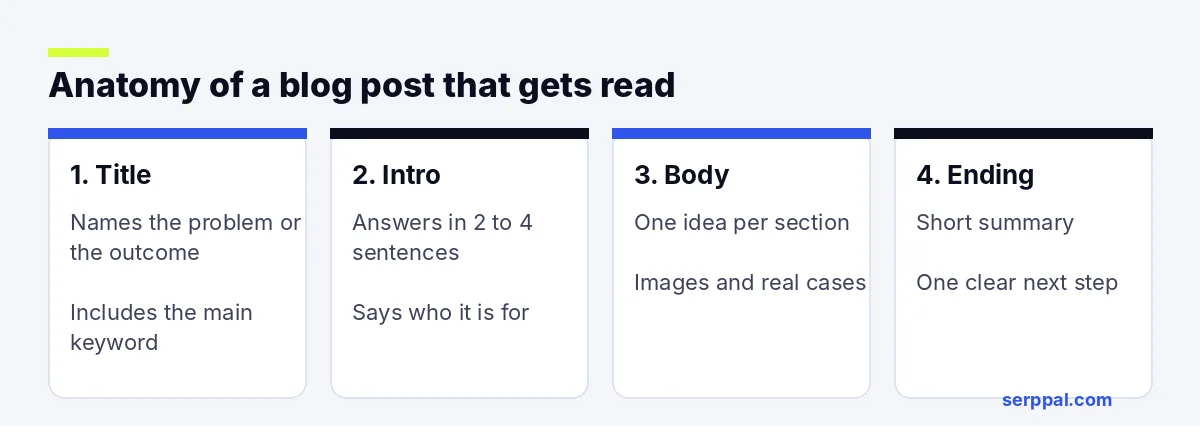
- A specific title. It names the reader's problem or the outcome. "How to Write Your First Blog Post in an Afternoon" beats "Some Thoughts on Blogging."
- An intro that answers quickly. Two or three sentences that say what the piece covers and why it matters.
- Scannable sections. Most readers skim first. Clear subheads let them find the part they need, and short blocks of text keep it readable on a phone.
- Images and proof. Screenshots, photos, data and real experiences make advice concrete. A featured image also shows when the piece is shared on Instagram, Pinterest or other social media.
- One clear next step. A CTA at the end: read a related guide, join the newsletter, try the recipe, leave a comment.
Create a converting conclusion
The conclusion is where many blog posts lose the reader. Don't repeat the whole article. Highlight the one idea that matters most, then give a compelling next step that fits the topic: a free checklist after a how-to, a product page after a comparison, a related story after a personal essay. That's where conversions come from, and it helps readers connect the post to the rest of your marketing.
Implementing social proof
Social proof shows readers that others trust you: a short testimonial, a reader comment, a result from a case study, or the number of newsletter subscribers if it's meaningful. Place it near the call to action, keep it real and specific, and never invent it.
For search engine visibility, pick one main keyword, use it in the title and first paragraph, and link to related content on your blog. Our guide to blog post SEO covers the rest of how to optimize a post so it's optimized for Google, and a readability checker shows whether your sentences are easy to follow.
Step-by-step guide to your first blog post
Your first piece is mostly about getting started. These ideas work for almost any blog:
- An introduction. Who you are, what the blog will cover and who it's for. Keep it short and end with what's coming next.
- A how-to on something you already know. Your best skill, explained in order.
- A list of resources. The tools, books or websites that helped you most, with a line on each.
- The experience that started it. What made you want to write, and what you learned.
- An answer to the question people always ask you. If friends ask you the same thing, that's your next topic.
First blog post sample: "Hi, I'm Sam. I've cooked dinner for a family of five on a tight budget for eight years, and this blog is where I'll share the recipes, shopping lists and shortcuts that make it work. This week: my 30-minute pantry pasta and the five ingredients I always keep in stock." It introduces the author, the audience and the promise, then delivers something useful right away.
Blog post examples for students
Students write blog content for classes, school newspapers, study-abroad programs and creative side projects. The same rules apply, with a little more structure:
- Reflection: what you learned from a project, a trip or a semester, with specific moments rather than general feelings.
- Explainer: a concept from class explained for a reader who wasn't there, with a real-world case.
- Review: a book, film or exhibit, with a clear opinion and reasons.
- Study abroad diary: life across borders, from food and language to the moments that surprised you.
Student sample: "Three things my first chemistry lab taught me about failure," with a short intro, three sections, one photo and a two-line conclusion. Around 500 to 800 words suits most class assignments. If you're writing for a grade, check the length rules first; a word counter helps you stay inside the limit.
Blog post templates you can copy
Copy this structure for almost any topic:
- Title: the outcome or question, with your main keyword.
- Intro (2 to 4 sentences): the answer or promise, and who it's for.
- Key takeaways (optional): three to five bullets for skimmers.
- Body sections: one idea or step per section, each with an image or a concrete case.
- FAQ (optional): the questions readers ask next.
- Conclusion and next step: a short summary and one call to action.
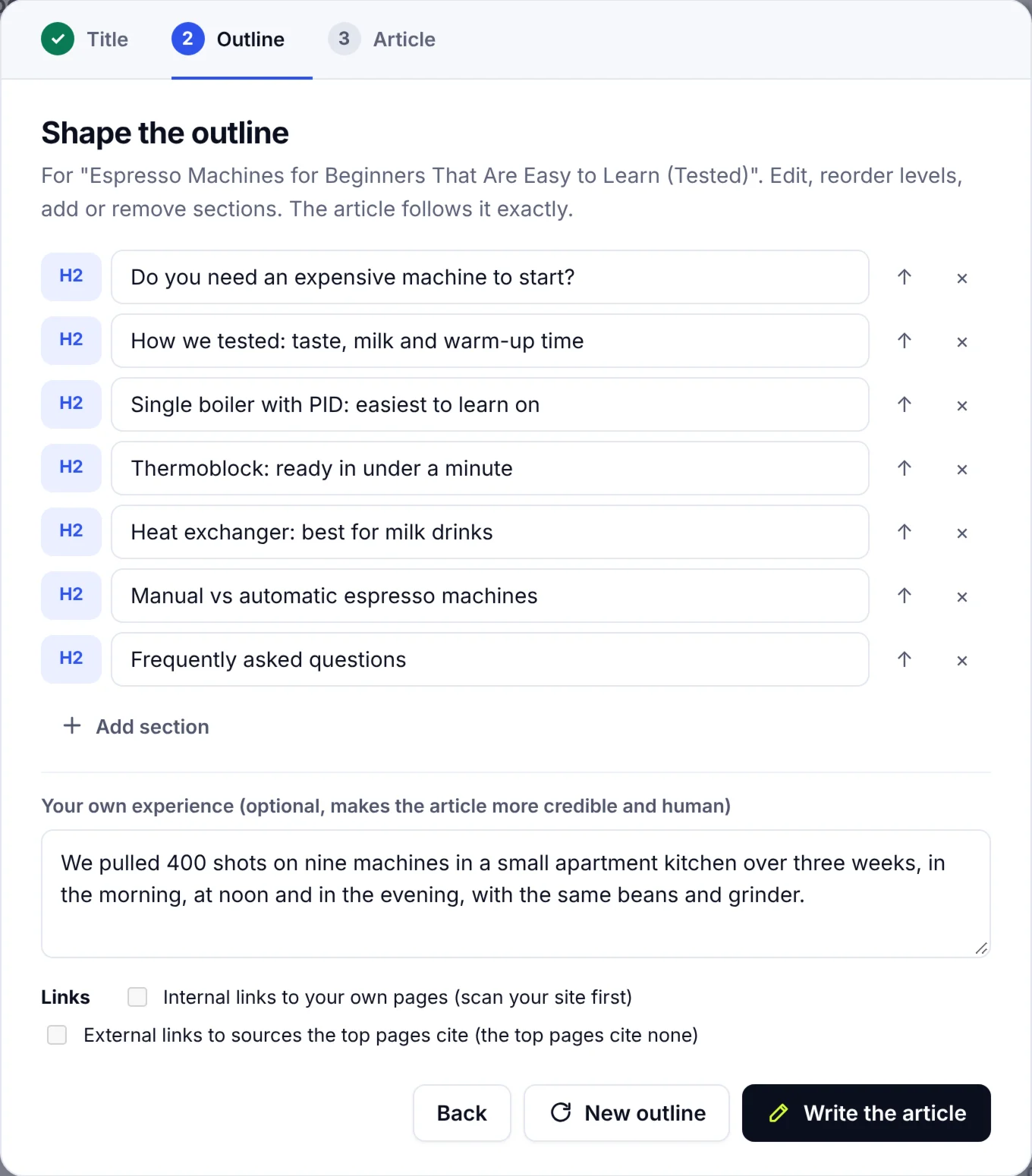
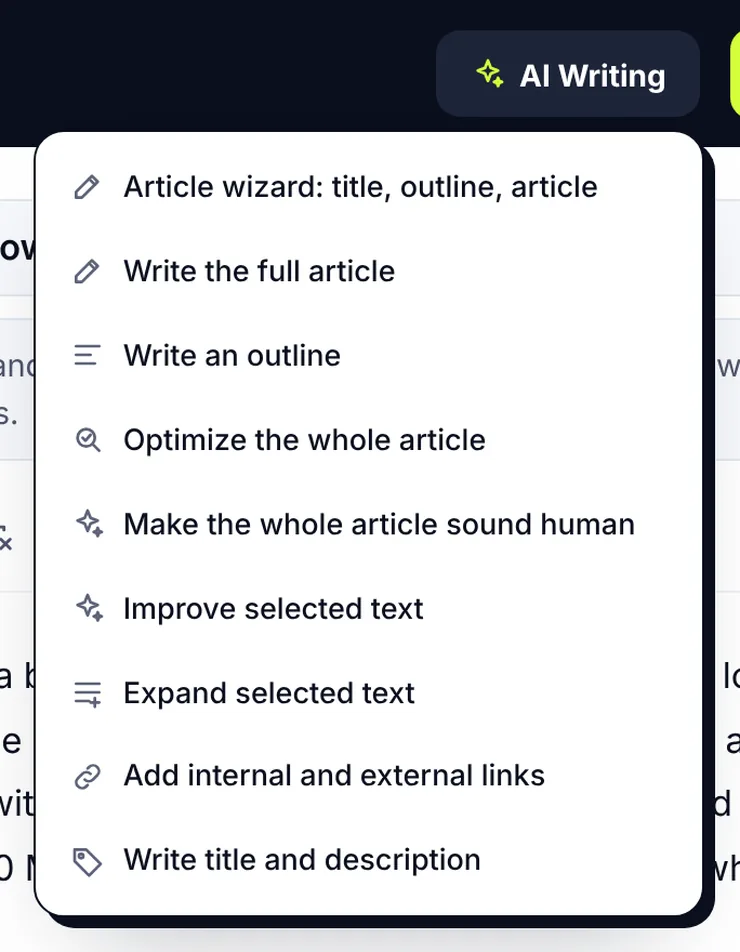
If you want a head start, an AI writer can generate a first draft from a title and outline, which you then edit with your own experiences and voice. SerpPal's AI writer does this and shows which topics the top-ranking pages cover, so your draft doesn't miss what readers expect. Treat any draft as raw material: your opinions and real experiences are what make a high-quality piece worth reading, and they're what a content strategy built on trust and consistency needs. AI can speed up content creation; it can't replace your point of view.
FAQ
What are the main types of blog posts?
The most common types are how-to guides, listicles, ultimate guides, personal essays, case studies, reviews, comparisons, opinion pieces, interviews and roundups. Most bloggers mix several, choosing the format that best answers each topic.
How long should a blog post be?
Long enough to answer the question fully and no longer. Quick tips and news can be 500 to 800 words, how-to guides often run 1,200 to 2,000, and in-depth guides covering topics fully can pass 3,000 words. Look at the pages that rank for your topic to see what readers expect.
What should my first blog post be about?
Start with an introduction that says who you are and what the blog covers, or a simple how-to on something you know well. Either gives visitors a reason to come back. Don't wait for the perfect idea; your writing improves with each one you publish.
What makes a blog successful?
Useful, engaging content on topics your audience cares about, published on a consistent schedule. Specific titles, fast answers, clear sections and one next step per entry help each piece perform, and a clear brand and voice turn one-time visitors into regular readers.
Why should I start a blog, and what are the pros?
A blog gives you a home for what you know: it builds an audience you own, brings visitors from Google over time, and gives clients or employers proof of your thinking. For a business, it answers customer questions and supports search engine optimization. The main cost is time, so start with a schedule you can keep.